


You have a number in mind — and you are not sure if it is realistic. Or you have been quoted a number and you are not sure what it includes. Or you have seen two prices for what appears to be the same type of elevator and cannot understand the difference. The residential elevator cost landscape in Malaysia is genuinely confusing — partly because most providers make it that way deliberately.
This guide breaks down every factor that influences what you actually pay — transparently, specifically, and in terms that let you compare options with full information.
Factor 1: The Technology Type
This is the single largest variable in elevator installation cost — and the one most commonly overlooked in early-stage research. Traditional hydraulic or traction elevators require a pit, a reinforced shaft, and a machine room. In Malaysia, the construction cost for these three structural elements alone can range from MYR 80,000 to MYR 200,000 before the elevator unit itself is priced.
Air-driven pitless elevators — like the full Nibav range — require none of these. The elevator is self-supporting, stands on your existing floor, and is installed in 4 to 5 working days by certified technicians. When comparing residential elevator costs across technology types, always ensure you are comparing total installed cost — not just the unit price.

Recommended Reading
Factor 2: Cabin Size and Capacity
Larger cabins cost more. This is intuitive — but the relationship between cabin size and price is not linear, and the practical implications for daily use make the upgrade decision more nuanced than pure cost minimisation.
In the Nibav range: the Series III Standard (749mm internal, 210kg) and Series IV Standard (830mm internal, 210kg) serve one to two users efficiently. The Series III Max (1,160mm, 240kg), Series IV Max (1,240mm, 240kg), and Series V Max (1,240mm, 240kg) serve wheelchair users with attendants and multi-person daily use. The price difference between entry and wheelchair-accessible tiers is significant — but for a household where wheelchair access is a current or future requirement, the cost of the smaller model is irrelevant. You need the right cabin for the people using it.
Factor 3: Number of Floors
Every additional floor served adds to the final home lift pricing through two mechanisms: increased travel height — more cylinder length — and an additional door set at each new landing. All Nibav models support up to 4 stops (Ground + 3 floors) within a maximum travel height of 13,500mm.
The increment per additional floor varies by model and site configuration. Nibav consultants provide a specific, itemised quote for your home’s exact floor count — contact nibavlifts.my for a free site consultation with transparent pricing.
Move Smarter, Not Harder.
Better, Faster, Quieter, Safer & Easier Movements Just One Call Away!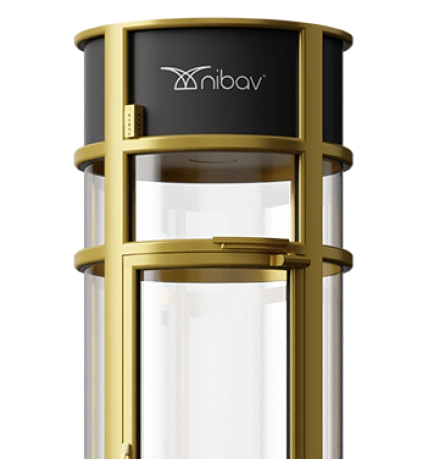
Factor 4: Features and Customisation
At the entry level — Series III Standard and Series III Max — the standard feature suite covers everything essential for safe, reliable residential use. As you move into the Series IV range, AI and Alexa integration, frameless panoramic entry, VividTouch smart display, and 24+ colour and finish options add to the price. In the Series V range, HeartLine laser cabin engraving, SkyMark illuminated ceiling, SmartConnect emergency communication, AutoGlide sensor doors, and CoreShield 25-year warranty represent a further tier of investment — appropriate for homeowners who want the elevator to be as considered as the rest of their premium interior.
Customisation — specific finishes, Hydro Edition cabin colours, leather accents, engraving — adds to the base price and varies by selection. All customisation pricing is transparent and itemised by Nibav consultants before any purchase commitment is made.
Factor 5: Ongoing Cost — Energy and Maintenance
The elevator installation cost conversation should not end at purchase. The ongoing cost of ownership — energy and maintenance — is where the total residential elevator cost is fully understood.
Nibav’s air-driven range consumes electricity only on ascent, with descent powered by natural air pressure at zero cost. Compared to hydraulic systems operating pumps in both directions, the annual energy saving is meaningful for a household in daily use. On maintenance, Nibav’s grease-free, mechanically simplified design means fewer components replaced per visit and lower overall servicing frequency. The CoreShield 25-year warranty on Series V motor and vacuum seal eliminates the largest potential replacement cost from the ownership equation.
When all five factors are evaluated together — technology type, cabin size, floors, features, and ongoing cost — the full residential elevator cost picture becomes clear. And for most Malaysian residential properties, a Nibav air-driven elevator at any model tier represents better total value than any traditional installation with equivalent capability.
Get a fully itemised, transparent quote for your home. Book a consultation at nibavlifts.my.
Frequently Asked Questions
1. What is the biggest factor influencing residential elevator cost in Malaysia?
Technology type is the most significant variable. Traditional hydraulic or traction elevators require pit, shaft, and machine room construction that can cost MYR 80,000 to MYR 200,000 before the unit is priced. Air-driven pitless elevators like the Nibav range install with zero civil construction — making the total installed cost comparison strongly favour the air-driven option for most Malaysian residential properties.
2. How much does elevator installation cost in Malaysia?
For Nibav’s air-driven home elevators, standard installation is included within the quoted price of the lift. Prices start from MYR 89,900 for the Series III Standard. Since Nibav elevators do not require a pit, machine room, or conventional shaft, homeowners can avoid the additional civil construction costs often associated with traditional elevators. However, customisation options, site-specific requirements, and applicable taxes or duties, if any, may be charged separately. Always confirm the final scope and inclusions in your quotation.
3. Does customisation significantly affect the final home lift price?
Yes, depending on the selections made. Standard colour options add little to base price, while premium Hydro Edition finishes, leather accents, and HeartLine engraving are itemised additions. All customisation is transparent and priced before any purchase commitment — Nibav consultants provide a complete itemised quote including all selected customisation.
4. Is the price difference between standard and wheelchair-accessible models worth it?
For households where wheelchair access is a current or anticipated future requirement, the wider cabin is not optional — it is the correct specification. The Series III Max, Series IV Max, and Series V Max all offer wheelchair-accessible 1,160mm to 1,240mm cabins. The price increment is a function of the additional engineering involved, not a luxury premium.
5. How do energy costs compare between hydraulic and air-driven elevators?
Hydraulic elevators consume electricity during both ascent and descent. Air-driven elevators consume electricity only on ascent — the descent uses natural air pressure at zero cost. For a household making 15 to 20 journeys daily over 15 years, the cumulative energy cost difference is significant and compounds annually.
6. What is included in the Nibav Series V CoreShield warranty?
CoreShield provides a 25-year protection promise specifically on the motor and vacuum seal — the two components with the highest replacement cost in any pneumatic elevator. This warranty is named and specific, not a general product warranty with broad exclusions. It effectively removes the largest potential maintenance cost from the Series V ownership equation for a full generation.
