

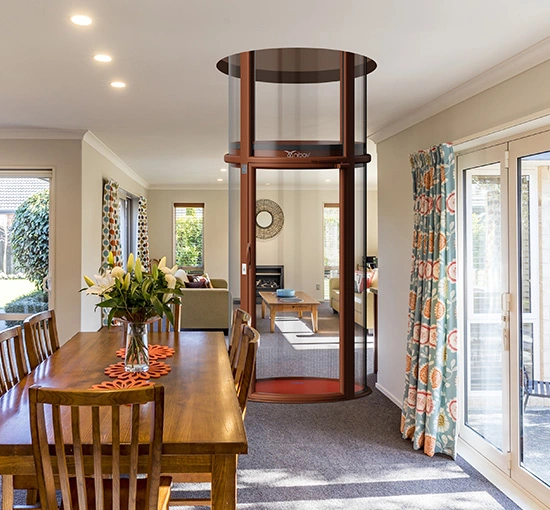
Your home elevator works flawlessly for years. Then one morning, the cabin does not level properly on the second floor. Or there is a sound you have not heard before. Or the door takes a fraction of a second longer to close. Most homeowners ignore these signals — not out of negligence, but because the elevator keeps working, and a problem that does not stop you from using something rarely feels urgent.
It becomes urgent the day it stops working entirely. Or worse, the day it stops working with someone inside.
Home lift repair is one of the most underinvested areas in residential elevator ownership — and one of the most consequential. This guide covers what long-term performance actually requires, what early warning signs look like, and how the technology you chose at purchase directly shapes your servicing experience for years to come.
Why Residential Lift Maintenance Is Not Optional
A home elevator is not a household appliance you can defer maintenance. It is a safety-critical mechanical system that operates under load and pressure, in a domestic environment, often serving elderly or mobility-limited users who depend on it daily. Every journey it makes is a safety event — and the gap between a well-maintained elevator and a poorly serviced one is the gap between reliable daily performance and a failure that cannot be predicted or easily reversed.

Elevator servicing exists to close that gap before it opens. Pressure seal integrity, door sensor calibration, cabin levelling accuracy, brake condition, control system diagnostics — these are not bureaucratic checklist items. They are the specific mechanisms that determine whether your elevator performs safely on journey 10,000 the same way it did on journey one.
What Happens When Residential Lift Maintenance Is Deferred
The degradation pattern of an unmaintained elevator is predictable. Pressure seals lose integrity gradually — not in a single failure, but through slow leakage that reduces efficiency and increases motor load before it causes a visible problem. Door sensors drift out of calibration — the door still closes, but the detection tolerance narrows until the day it does not respond quickly enough. Brake wear accumulates silently — the elevator stops correctly until the conditions under which it fails to do so arrive without warning.
None of these failures announce themselves. They develop over months or years of regular use, invisible to the homeowner, until the accumulated deficit crosses a threshold. Proactive residential lift maintenance exists precisely to catch these developments before they reach that threshold — not after.
What a Complete Elevator Servicing Visit Should Cover
A comprehensive service visit for a residential lift — particularly an air-driven vacuum elevator like the Nibav range — should cover the following at minimum:
Move Smarter, Not Harder.
Better, Faster, Quieter, Safer & Easier Movements Just One Call Away!
- Vacuum seal integrity test: Pressure hold test under operating conditions to verify no leakage at any point in the sealed system
- Motor performance check: Current draw, operating temperature, and cycle time within manufacturer specification
- Door sensor calibration: Full verification across every layer of the door lock system on every floor
- Cabin levelling accuracy: Floor alignment within specified tolerance on every stop
- Safety system activation test: Emergency descent, backup power, Child Switch, and Smart Overload Alert
- Error Log diagnostic review: For Nibav models, the onboard Error Log records all operational anomalies — a trained technician reads this data and identifies developing issues before they affect performance
- Structural inspection: Cylinder, cabin pillar, base plate, and all fasteners
- Grease-free component status: Confirmation that Nibav’s grease-free mechanical components remain within specification
If your current service provider cannot speak specifically to all of these items, they are not providing a complete servicing visit — regardless of what the invoice says.
The Technology Advantage: Why Nibav Elevators Are Easier to Maintain
The residual maintenance cost of any elevator is directly shaped by the complexity of its mechanical system. Hydraulic elevators require regular oil checks, seal inspections, and fluid management. Cable traction systems require cable tension monitoring, pulley inspections, and periodic cable replacement. Both require machine room access for routine servicing.
Nibav’s air-driven range — the Series III Standard, Series III Max, Series IV Standard, Series IV Max, Series V Standard, and Series V Max — is grease-free by design. No hydraulic fluid anywhere in the system. The simplified pneumatic mechanism has dramatically fewer components that degrade under regular use, which translates directly into lower servicing frequency, lower parts costs, and a more predictable maintenance bill over the life of the elevator.
For Series V owners, the CoreShield 25-year warranty covers the motor and vacuum seal — the two components that represent the largest potential maintenance cost in any pneumatic elevator. This is not a general product warranty — it is a specific, named promise on the parts most critical to long-term performance. No other residential elevator brand in Malaysia offers this level of manufacturer commitment on the components that matter most.
Early Warning Signs That Your Elevator Needs Attention
Between professional service visits, pay attention to these indicators:
The cabin is no longer flush with the floor surface on every stop — this suggests a levelling or pressure calibration issue. You are hearing a sound during operation that was not present before — mechanical noise in a well-functioning air-driven elevator is minimal, and any new sound is diagnostic information worth acting on. The door is taking longer to open or close than usual — this often indicates a door sensor beginning to drift out of calibration. The elevator is responding more slowly to control inputs — a potential signal of pressure system or motor performance change. Any of these warrants a service call before the next scheduled visit.
Finding the Right Home Lift Repair and Service Provider in Malaysia
The right provider for your Nibav elevator is one trained specifically on Nibav’s pneumatic technology, with access to genuine parts and the diagnostic capability to read the onboard Error Log System. Nibav Malaysia maintains 500+ trained technicians across the region — each equipped with Nibav-specific tools and trained on the specific failure modes and maintenance requirements of the full model range.
Contact Nibav to arrange a professional service visit or enquire about an ongoing maintenance plan suited to your model and usage pattern.
Do not wait for the elevator to stop working. Book your Nibav service visit today at nibavlifts.my.
Frequently Asked Questions
1. How often should a home elevator be professionally serviced?
For standard household usage, a minimum of one professional service visit per year is recommended. Elevators used daily by elderly or mobility-limited residents benefit from bi-annual servicing. Nibav’s onboard Error Log System allows technicians to identify developing issues between scheduled visits, enabling proactive maintenance rather than reactive repair.
2. What are the most common home lift repair issues in Malaysia?
The most common issues in residential lifts are pressure seal degradation, door sensor calibration drift, cabin levelling inaccuracy, and control system anomalies. All of these develop gradually and are detectable during a thorough servicing visit before they cause operational failure — which is precisely why deferred maintenance is the primary cause of avoidable home lift repair calls.
3. Can I use any technician for my Nibav elevator servicing?
Basic safety checks can be performed by any certified technician. For full diagnostic maintenance — including Error Log review, vacuum seal testing, and pressure calibration — Nibav recommends the manufacturer-aligned service network. Nibav’s pneumatic technology requires specific training that general elevator technicians trained on hydraulic or traction systems may not possess.
4. How do I know if my elevator needs a repair call between scheduled visits?
Watch for: the cabin not levelling flush with each floor, new sounds during operation, doors responding more slowly than usual, and any change in the elevator’s response speed. Any of these signals should prompt a service call rather than continued monitoring. Early intervention on developing issues is consistently less expensive than reactive repair.
5. Does elevator servicing affect the Nibav warranty?
Maintaining the elevator within Nibav’s recommended service schedule protects the Core Shield warranty terms on Series V models. Using the manufacturer-aligned service network ensures that warranty claims, if ever required, are processed without dispute. Contact Nibav Malaysia for full warranty conditions applicable to your specific model.
6. How much does a residential lift maintenance visit typically cost in Malaysia?
Service visit costs vary by model, scope, and provider. Nibav’s grease-free, mechanically simplified design reduces the typical cost per visit compared to hydraulic alternatives — fewer components require replacement or lubrication on each visit. Contact nibavlifts.my for current service plan pricing applicable to your model and usage pattern.
